Deep Sky Objects
Deep Sky Objects (DSO's) are objects that are so faint they are nearly impossible to see (with a few exceptions) without the use of binoculars or a telescope; these include galaxies, nebulae and star clusters. They are typically hundreds of thousands or even millions of light years away from us, meaning what we see is how they looked millions of years ago. That fact alone is mind-boggling to me and is probably my favorite thing to teach people about when I give star tours. It is possible that some of the objects we see are no longer there or may have changed in some kind of way (M1, the Crab Nebula is a perfect example of this; you can find images taken decades apart that show its growth over time). Below I will discuss the different types of DSO's that I have photographed and provide a little bit of information about them.
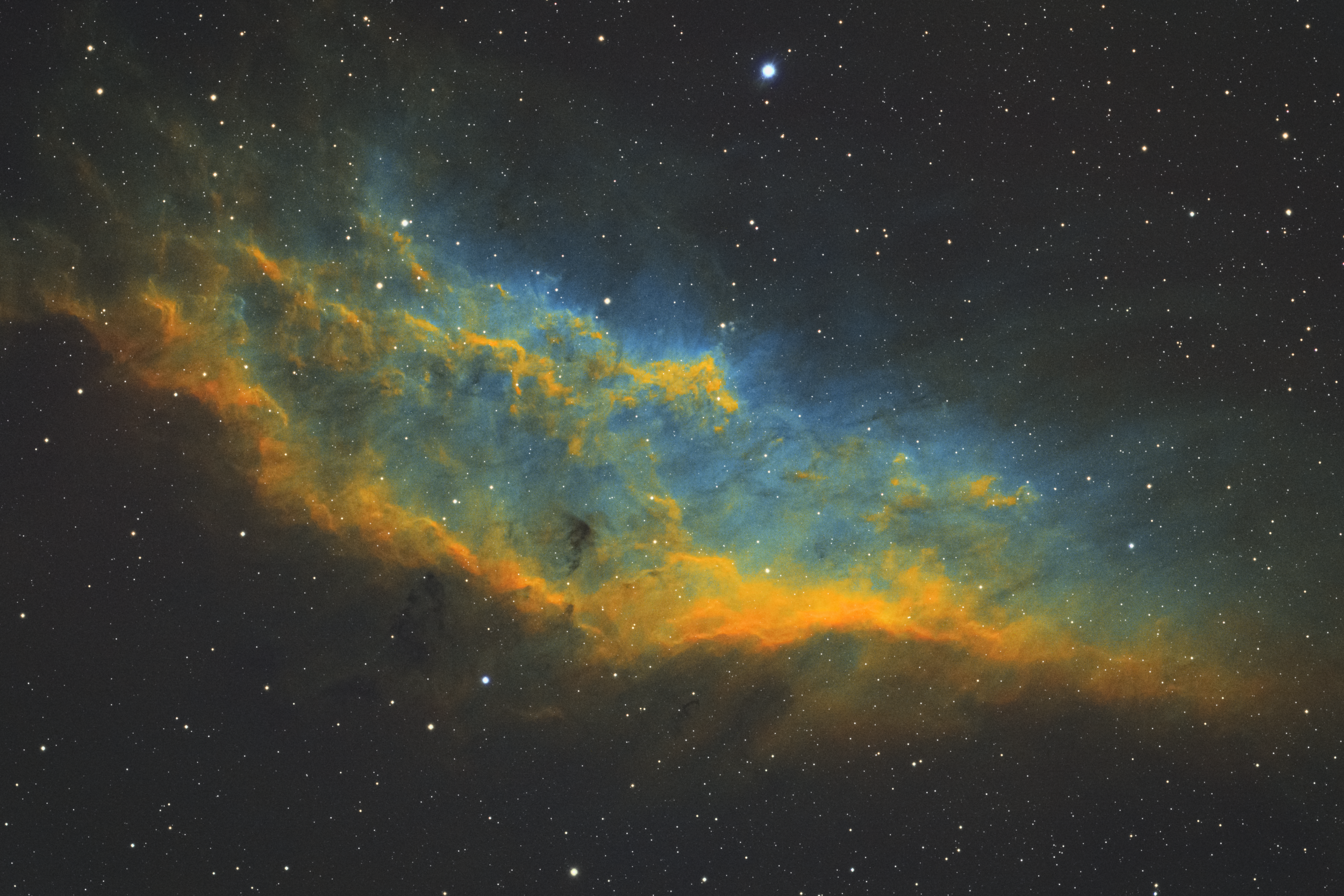
The California Nebula - NGC 1499 (SHO)
Nebulae
Nebulae are regions of ionized gas, mostly hydrogen but sometimes sulfur and/or oxygen, that glow beautiful colors. If you were to look through a telescope at a nebula, you would most likely see a very faint gray structure. Most of the nebulae you see in photos have been "stretched" from their normal or linear state so that you can see all of the amazing colors and details. Below are the three most common types of nebulae in the night sky.
Emission Nebulae (like the California Nebula pictured above) emit their own light in very specific wavelengths. To see this light photographers use filters to cut out all other external light sources (i.e. light pollution). This way we can have more accurate data without the introduction of unnecessary noisEmission nebulae usually have a dark red color when you photograph them with a traditional color camera because they emit photons at 656.3 nm.e. Emission nebulae have become the type of object that I photograph the most. Much of my work from 2023 to 2025 focused on these targets because mostly I photograph from the city where light pollution makes requiring filters a must.
Reflection Nebulae are another type of nebulae and are characterized by absorbing and re-emitting light from nearby stars. They often to reflect blue light and are near hot bright stars. Some examples of reflection nebulae would be the Orion Nebula, the nebulosity surrounding the Pleiades cluster and the Iris Nebula.
Dark Nebulae are a unique kind of nebulae that absorb light instead of emitting or reflecting. They represent the absence of light and look like shadows across the portion of a grander nebula that is light and colorful. One famous example of a dark nebula is the Horsehead Nebula (pictured below) in the constellation Orion.
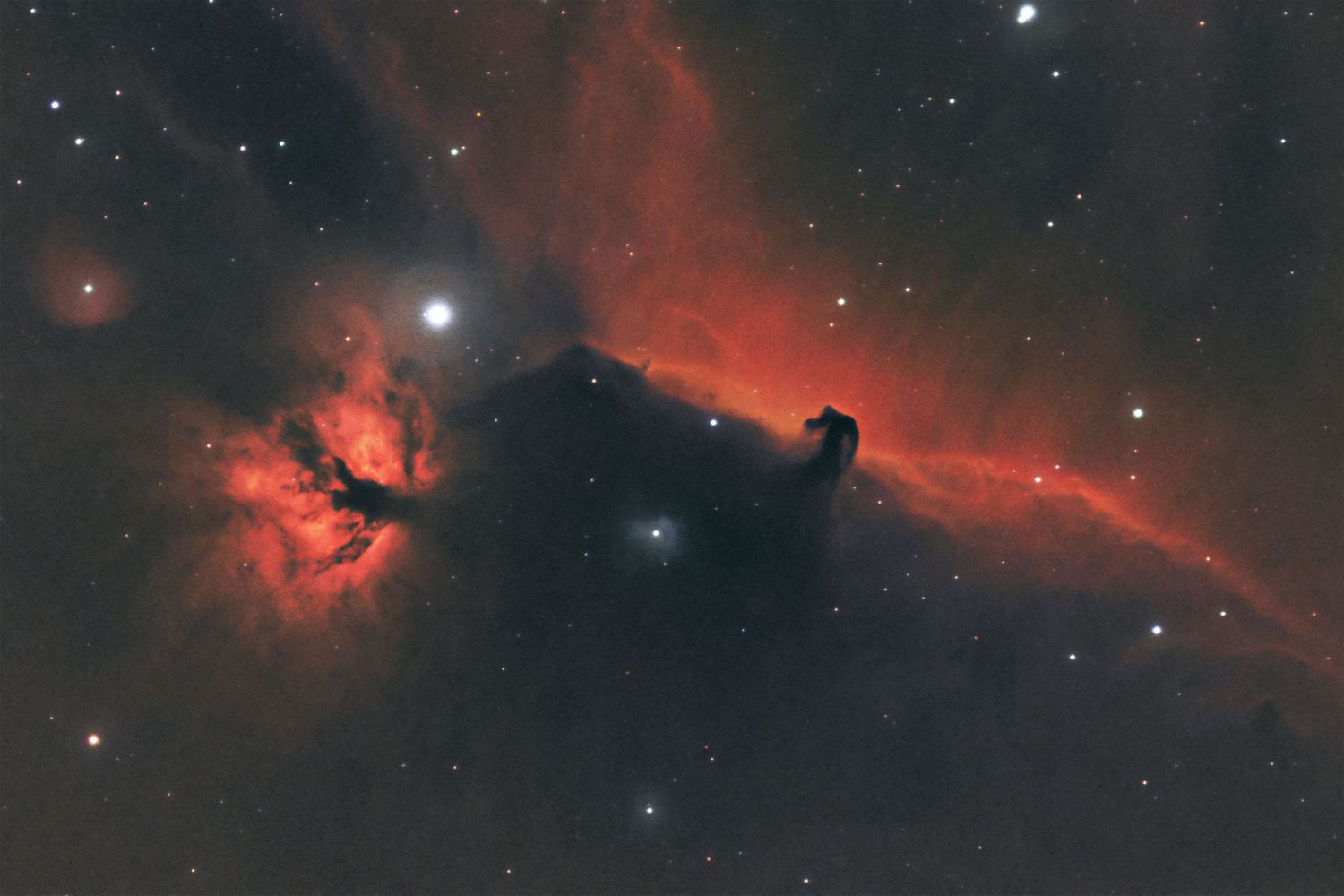
Flame & Horsehead Nebula - Bernard 33 (HSS, 2024 Version)
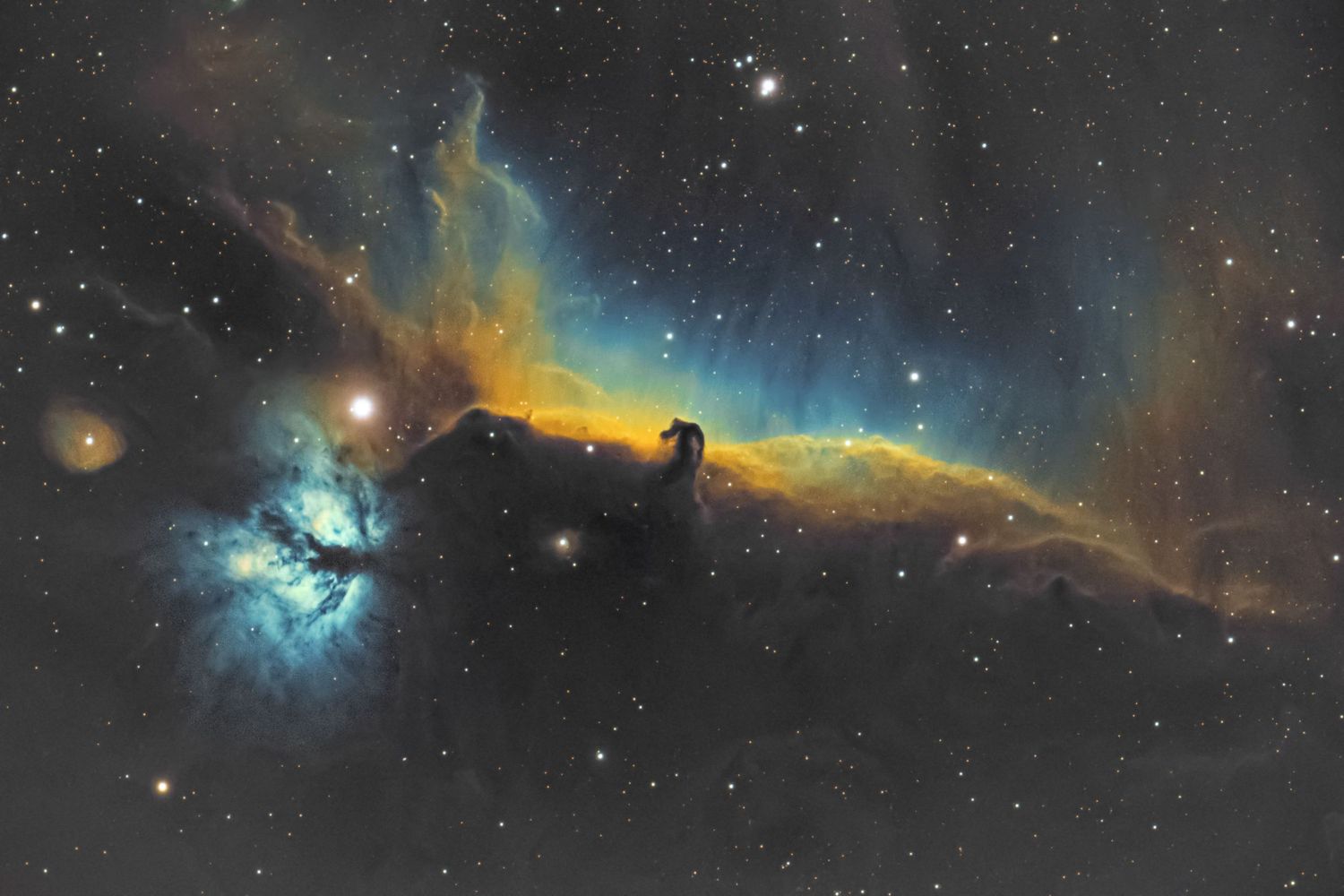
Flame and Horsehead Nebula - Bernard 33 (SHO, 2025 Version)
Galaxies
Galaxies are home to hundreds of billions if not trillions of stars. They are local neighborhoods flying through space and are home to all types of stars, nebulae, planets, and even a black hole at the center. There are many types of galaxies and a variety of sub-classifications based on their life cycle stages. Below are a few:
Spiral Galaxies - 60% of galaxies are Spiral Galaxies. They are by far the most common type and are distinct due to having spiral arms that extend out radially in a spiral patter. Spiral Galaxies often younger (although not always the case) than their elliptical counterparts, because they have had less time to muddle or blend their spiral arms. Our own galaxy the Milky Way is a Spiral Galaxy and is even in a sub-class called a Barred Spiral Galaxy.
Barred Spiral Galaxies - of the 60% of galaxies that are Spiral, two-thirds of them are considered "Barred". Barred Spirals have, as you may expect, a bar shape that runs through the center.
Elliptical Galaxies - 20% of galaxies are Elliptical Galaxies. They look like ellipses or ovals and are usually redder than Spiral Galaxies; nearly all of the young, hot, blue stars have died out and all that remains are the older, slower-burning red dwarfs. Ellipticals have less structure than other types of galaxies. One way you can identify an Elliptical Galaxy in an image it round like a star, but it is not a pinpoint single point of light. There is a gradient or gradual fade to the color and brightness as you get further from the center.
Lenticular Galaxies - Lenticular Galaxies are interesting because they exhibit characteristics of both Spiral and Elliptical Galaxies. As galaxies age they go through a life cycle starting as a Spiral, aging into a Lenticular, and finishing as an Elliptical; this is not a certainty though. It is possible for multiple galaxies to collide and speed up this jump to Elliptical, which is precisely what is expected to happen when Andromeda collides with our Milky Way in 4.5 billion years.
Irregular Galaxies - The remaining 20% of galaxies are part of a subgroup called Irregular Galaxies. These galaxies have atypical features and shapes. They are often born out of the collision between two galaxies.
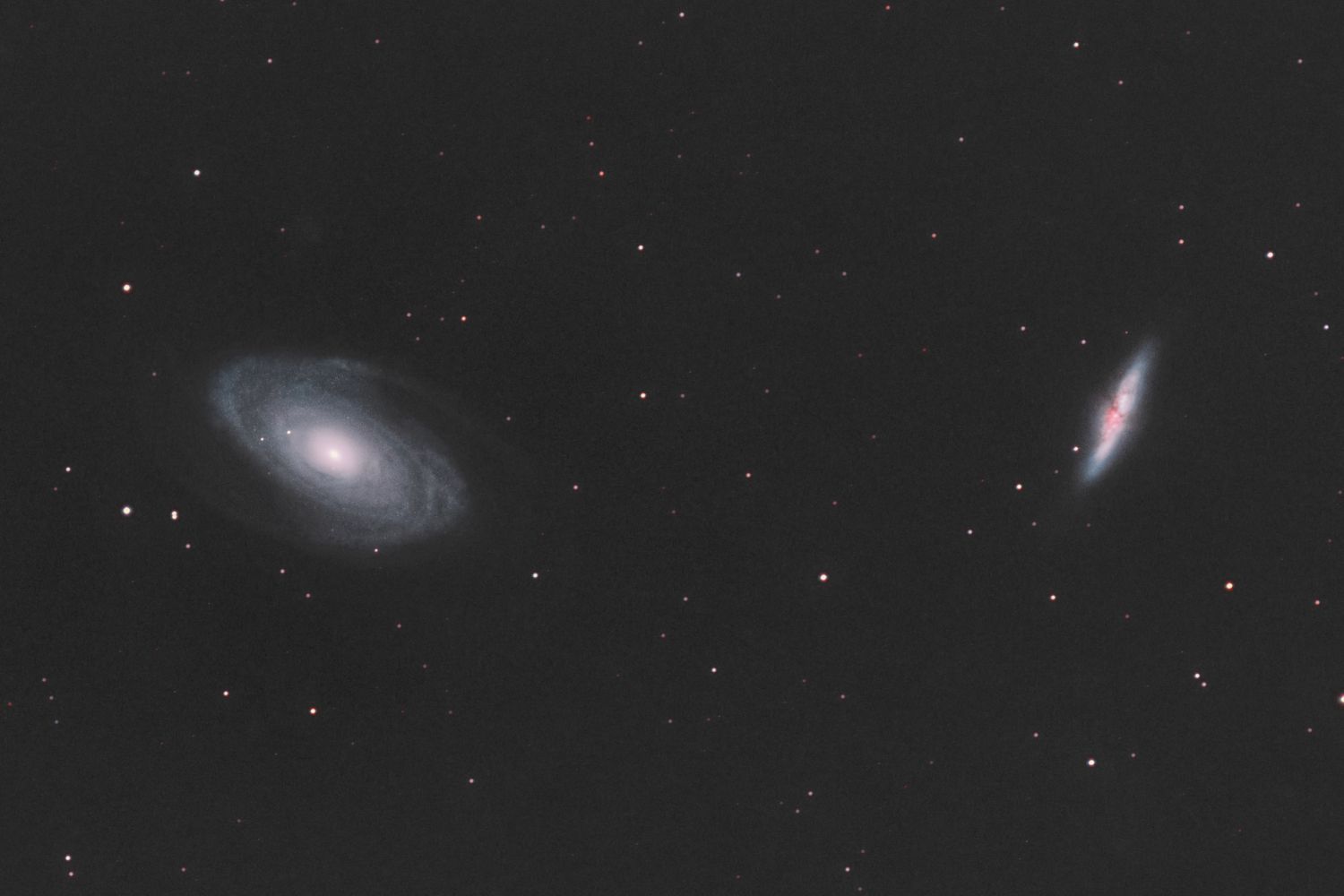
Bode's Galaxy - M81 (Spiral) & The Cigar Galaxy - M82 (Irregular)
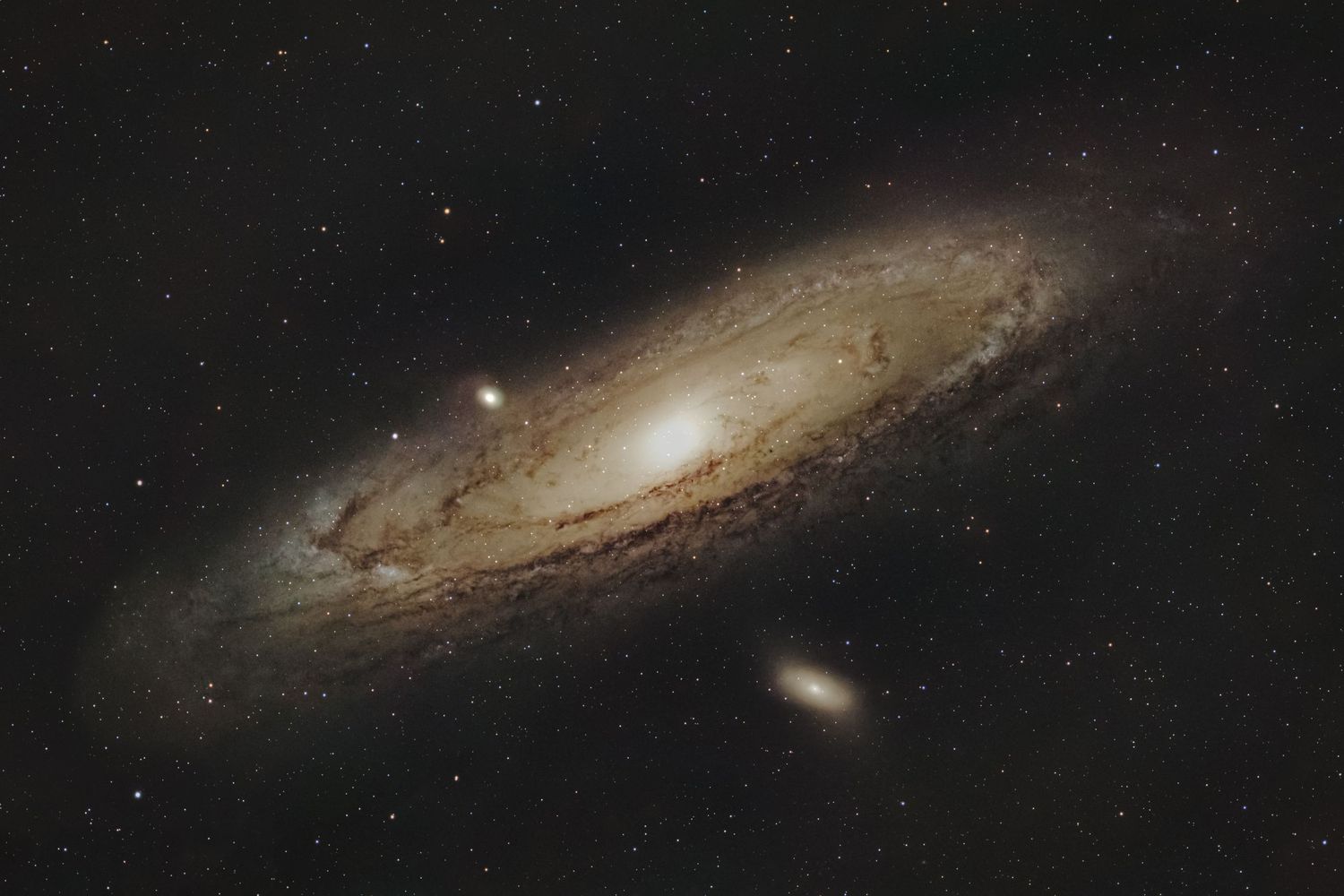
Andromeda (Barred Spiral, Center), M32 & M110 (Elliptical, Satellite Galaxies)
Star Clusters
Open Clusters - About 90% of all star clusters are Open Clusters. They have a spread out nature to their shape with stars appearing much farther apart than their Globular Cluster counterpart. Great examples of open cluster include the famous Pleiades star cluster, also known as the Seven Sisters, and the Praesepe or Behive Cluster. Open clusters are easy to identify because they don't have a standard shape to them. There is a large gap between the stars when compared to Globular Clusters.
Globular Clusters - The remaining 10% or so of star clusters are Globular Clusters. As their name suggests, they appear to have a concentric spherical shape to them. They look rounded like a globe and have a much higher star density than Open Clusters. They contain hundreds of thousands if not millions of stars. I have only photographed one globular cluster in all my years of doing astrophotography. They are on my bucket list because of the short time requirement, but often a brighter more detailed Emission Nebula catches my eye and puts a hold on the basic Globular Cluster.
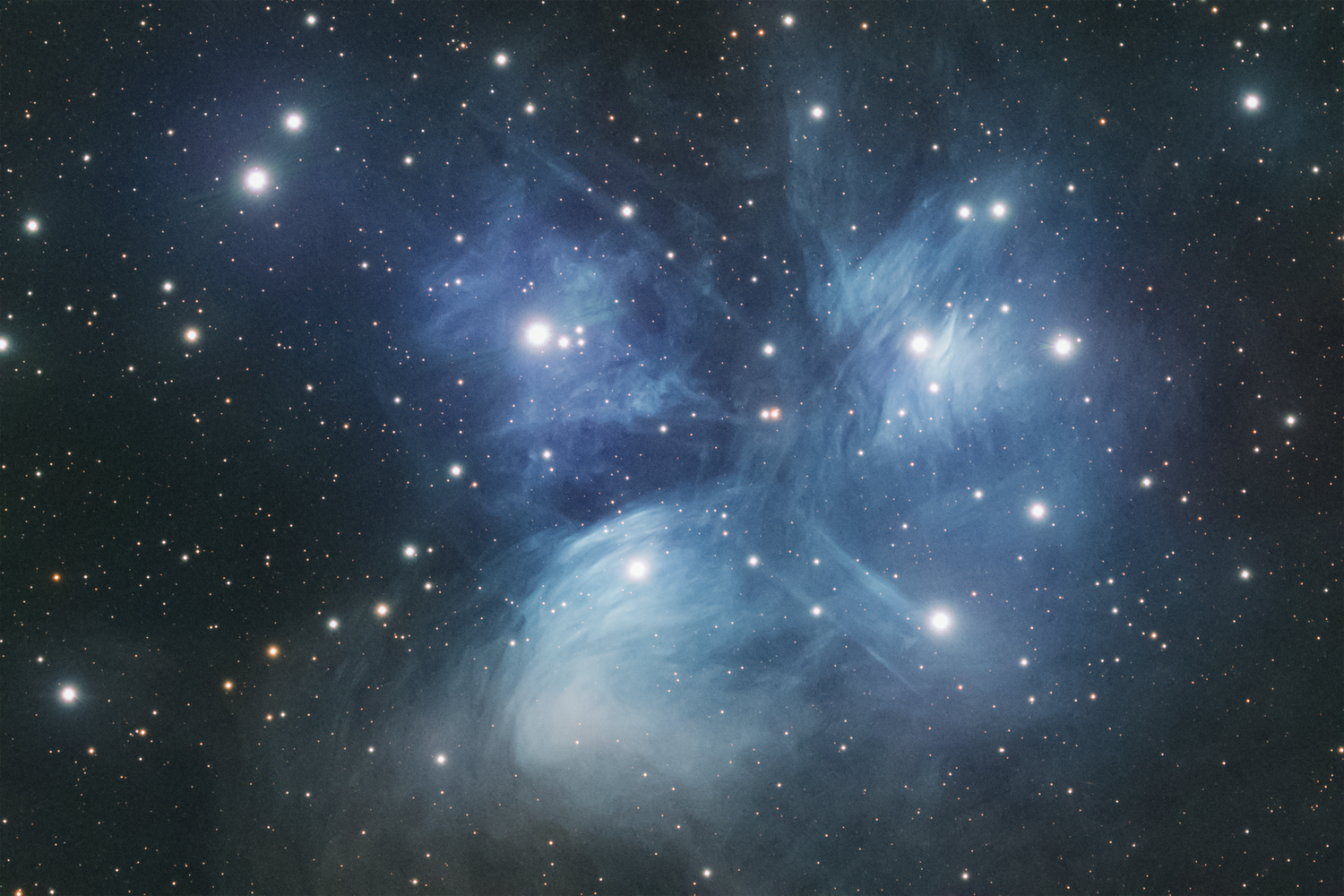
Pleiades (Open Cluster)
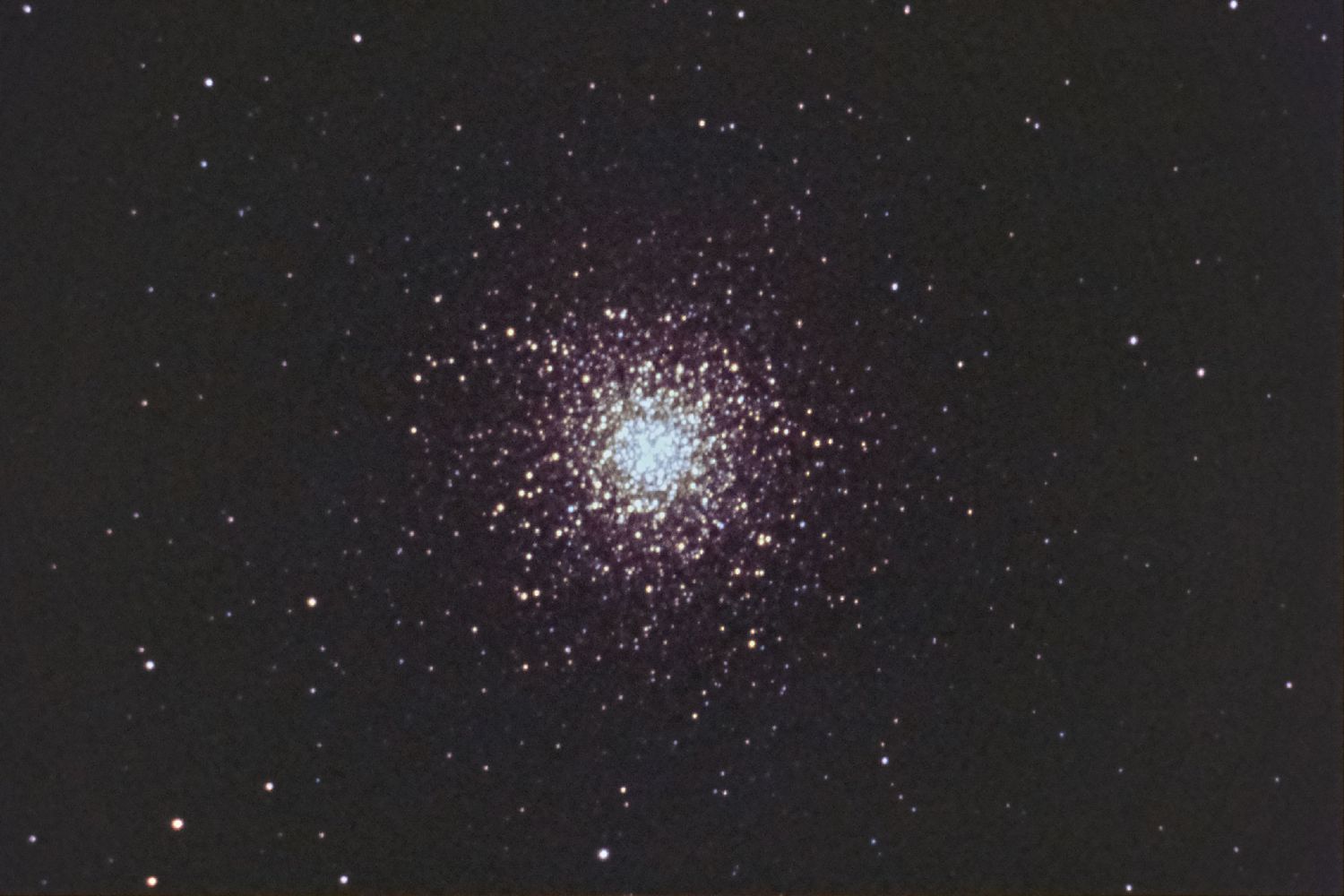
Great Hercules Cluster (Globular Cluster)
What Telescope is Used for DSO's?
The telescope of choice for beginners is usually a wide field refractor or newtonian for imaging DSO's. By choosing a scope with a small or medium focal length (150mm-600mm) it gives wiggle room for error. This could be in the form of a less accurate polar alignment, guiding corrections, or even wind. William Optics' RedCat 51 has been a staple for me over the last 5 years. Below are two different models, showing the growth of my setup over time. If you are interested in learning more about why this is a top recommendation for beginners head over to the Gear page to see why.
Find Gear that Suits your Style
Photographing Deep Sky Objects is a long but rewarding journey. However, not everyone is interested in these faint targets. Knowing the type of objects you want to image is crucial for saving yourself from unnecessary headaches. If you have questions about your setup or you are new to the hobby and need help, please feel free to reach out with the button below. You can also email me at:
contact@discoverastro.org